On Understanding the Value of Art
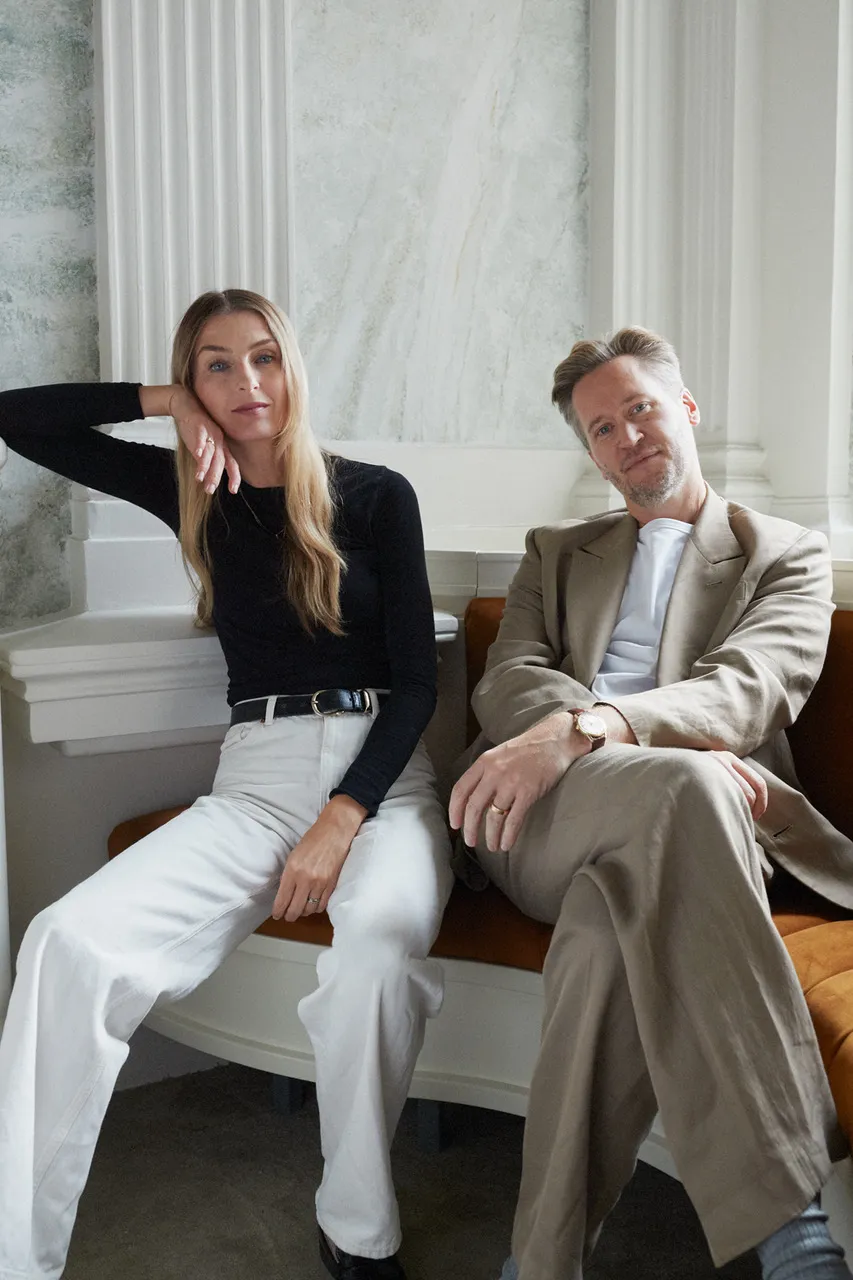
In their new book, Karolina Modig and Erik Modig explore how art shapes our minds, our society, and our everyday lives.
What is the value of art – really? That is a question that has followed journalist Karolina Modig and marketing researcher Erik Modig (Stockholm School of Economics) for over a decade. With their new book ‘Värdet av konst – för hjärnan, samhället och livet’, they aim to create a nuanced understanding of how the term “value” can be applied to art, at a time when the role of culture is both questioned and undervalued.
The seed for the book was planted when Erik, during his doctoral research, came across a study showing how art affects its surroundings in surprisingly concrete ways. He began collecting similar research from psychology, neuroscience, marketing, cultural studies, and health. At the same time, Karolina was working as editor for Konstnären, in a period when questions about artists’ rights, market logic, and the democratic role of culture were high on the agenda.
“Sometimes the art world struggles to articulate its value, and politicians find it difficult to talk about values without trying to control art or involve money. We wanted to see if research could build bridges and create a kind of shared language between people working in different fields, but who are still connected to art or culture,” says Karolina.
The book revolves around three central questions: Which art affects us? How are we affected? What values are created? Together, these provide a structure that both those familiar and unfamiliar with art can navigate.
“The discussion about value can sometimes be so one-sided. Art is either considered worthless or burdened with enormous expectations. We try to show that the values of art are many, varied, and often complex,” says Erik.
“Art is either considered worthless or burdened with enormous expectations.”
An important ambition of the book is to help people in the art world put into words what they intuitively know but often lack the language to express.
“Many of us working in the cultural sector can feel the value of our work, yet struggle to express it in ways understood by politicians, economists, or other decision-makers. Through the book, we hope more people can understand and talk about value in terms that make sense outside their own sphere,” says Karolina.
Because we live in a measurement-driven culture, silence can be dangerous, she adds:
“If we don’t articulate the values that art creates ourselves, someone else may define them for us – and that can happen in ways that limit art.”
For many cultural workers, the book can thus serve as an argumentative tool, a way to explain why art is needed in schools, healthcare, public spaces, and people’s everyday lives. It offers concepts, perspectives, and research that can be applied in everything from project proposals to cultural policy discussions.
-

Värdet av konst – För hjärnan, samhället och livet. Arvinius + Orfeus Publishing.
At a time when several authoritarian states are investing heavily in culture while democracies cut back, the question becomes even more pressing. Art can be a tool of power, but it can also be a safeguard for an open and free society. With Värdet av konst, Karolina and Erik hope that both decision-makers and the public will gain a more insightful understanding of the importance of art.
“We want art to become a natural part of how we talk about the brain, society, and life,” says Erik.
Värdet av konst – För hjärnan, samhället och livet (2025) by Karolina Modig & Erik Modig.
Published by Arvinius + Orfeus Publishing
Editorial
On Understanding the Value of Art
In their new book, Karolina Modig and Erik Modig explore how art shapes our minds, our society, and our everyday lives. What is the…
Editorial
Discover the story behind the new Art Film Festival Stockholm
Silvana Lagos shares the ideas shaping Stockholm’s new Art Film Festival. This weekend, together with Artlover Magazine, Nathalie Djurberg and Hans Berg will launch…

Collaborations, Editorial
Honouring a Legacy: The Fredrik Roos Foundation and Its Commitment to Nordic Art
For the representatives active in the The Fredrik Roos Foundation, the late Fredrik Roos (1951–1991)’s passion for contemporary art continues to be a lasting…

Collaborations, Editorial
A Collector’s Eye: Finding Character in Art and Real Estate
For Per Jansson, his eye for discovering properties with unique character and elevated aesthetics has influenced the art he collects. His first acquisition, an…